
J.S.Bach
Works for clavier and Harpsichord The musical excerpts vary from full length works to just extracts. It is unto you how much you actually listen to,

Johann Sebastian Bach was born in Eisenach on 21 March.1685 He retained many memories of his childhood in Eisenach throughout his life, including the family home (which also contained rooms for trainee musicians), the traditional grammar school with its choir in the old Dominican monastery, St George’s Church and its organ, and the town hall, where brass musicians performed from the tower.
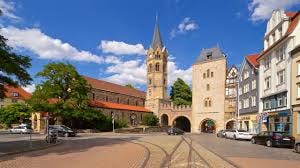
In 1694, J.S. Bach’s mother, Elisabeth, died in May. and in 1695 Bach’s father, Johann Ambrosius Bach, died on 20 February. Now an orphan, Bach moved to Ohrdruf, where he lived with his brother Johann Christoph, fourteen years his senior and the organist at St Michael’s Church. Together with his brother Johann Jakob and also his cousin Johann Ernst, Bach attended the grammar school. Under Johann Christoph’s guidance, Bach learned to play the organ. During this time, the organ at St Michael’s was completely overhauled, allowing the young Johann Sebastian to learn the basics of organ construction. In 1704, he wrote a keyboard composition, the Capriccio in E major, dedicating it to his elder brother.
1700 - 06
J.S. Bach was a chorister at St Michael’s School in Lüneburg and a pupil of Georg Böhm. He visited Johann Adam Reincken in Hamburg and studied the organ heritage of north Germany.
The young Bach’s musical abilities were long a matter of speculation, as there were far too few authoritative sources about his early years. In 2006, however, copies of north German organ works were discovered in the Anna Amalia Library in Weimar, which turned out to be the earliest surviving manuscripts written in Bach’s own hand. Bach must have possessed extraordinary musical and performance abilities when he was just thirteen, for the copies found in Weimar, which he produced as a schoolboy in Lüneburg and Ohrdruf, include two of the most difficult organ compositions of his day. In addition, the find provides important information about an always assumed but never proven link between Bach and Georg Böhm (1661–1733), a noteworthy Lüneburg organist and composer, for the paper used by Bach for his copies came from Böhm’s possession.
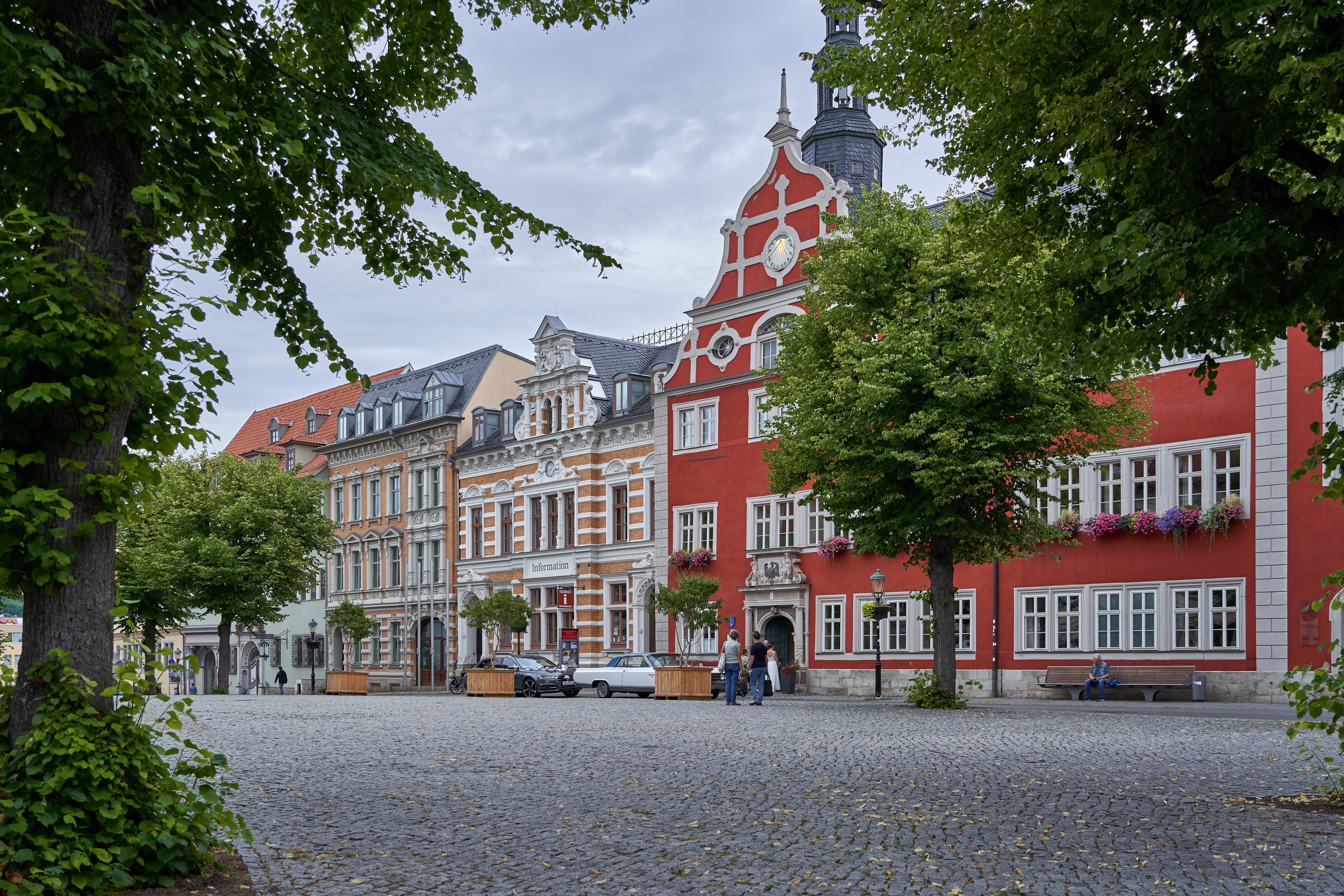
In July, Bach went to Arnstadt in order to examine the new organ built by Johann Friedrich Wender at the New Church (now the Bach Church). Later on, he was appointed organist at the New Church. Many members of the Bach family lived and worked in Arnstadt between 1620 and 1792. A total of seventeen family members were born there, while eight got married and twenty-five were buried in the town.
In June,1707, Bach became the organist at St Blasius’s Church in Mühlhausen. On 17 October he married his second cousin Maria Barbara in the church in Dornheim (near Arnstadt)..In June, Bach was appointed a chamber musician and organist at the court of Dukes Wilhelm Ernst and Ernst August of Saxe-Weimar. He remained there until 1717, composing numerous works for the organ and harpsichord as well as more than thirty cantatas. He mainly worked at the palace church, which was later destroyed by a fire in 1774.
A few years later, Bach gave a number of recitals at the royal court in Weissenfels, which enjoyed an excellent reputation far and wide for the high quality of its musical performances. In 1729, Bach was appointed Royal Kapellmeister of Saxe-Weissenfels by the Elector of Weissenfels – a position he was entitled to exercise without having to relocate.
In 1714 J.S. Bach was promoted to concertmaster – a position which entailed composing new music every month.
On 8 March, Bach’s son Carl Philipp Emanuel was born. One of his godfathers was Georg Philipp Telemann.
In August 1717 Bach signed his contract as Kapellmeister at the court of Prince Leopold of Anhalt-Köthen, albeit without asking permission to leave Weimar. His resignation was refused, and he was imprisoned for a month for disobedience. In December, Bach was released from detention and unfavourably dismissed, allowing him to start work in Köthen.
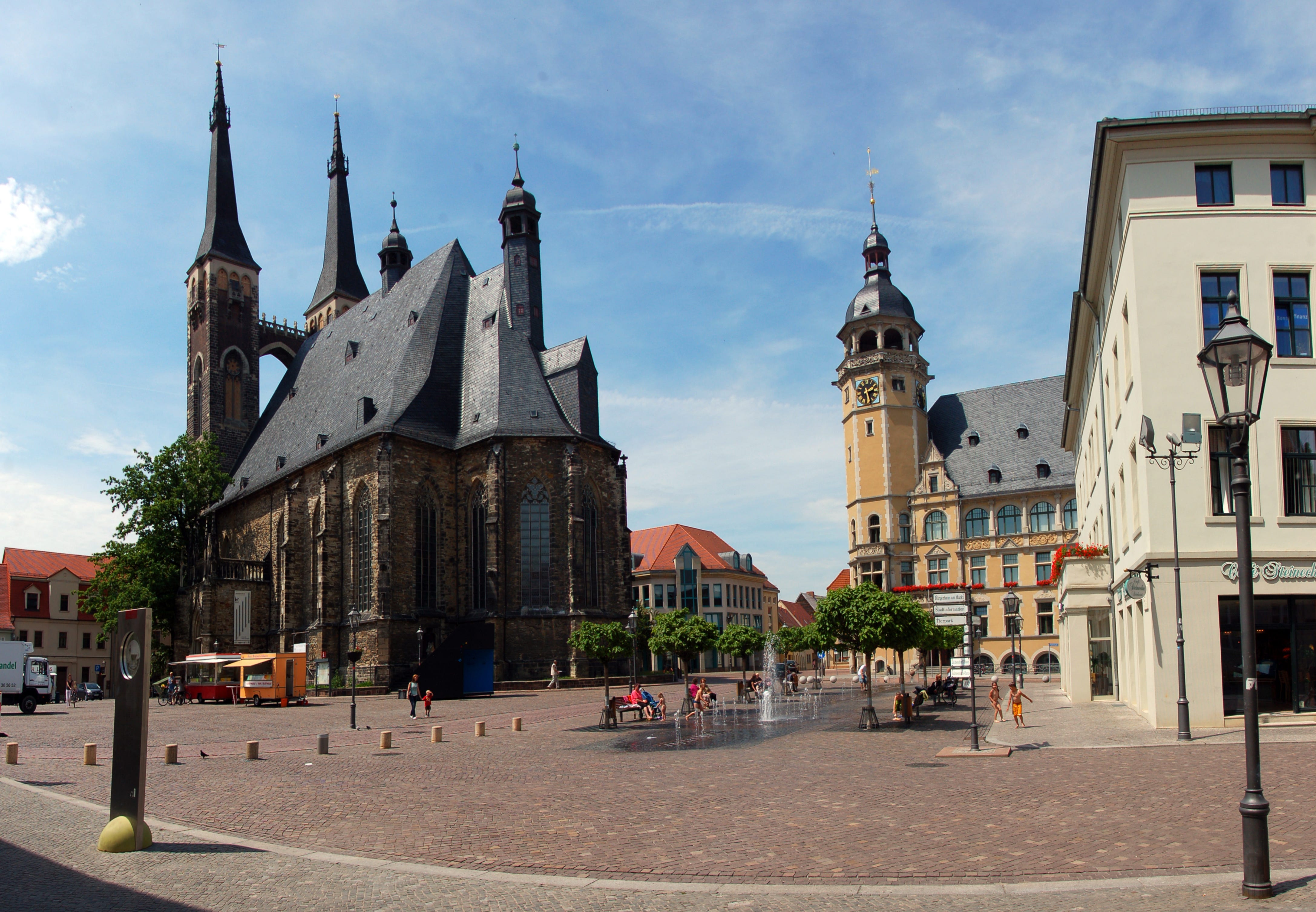
That same month, he travelled to Leipzig, his future home, to inspect the organ at St Paul’s Church.
1720 When Bach returned from a trip to Karlovy Vary, accompanying the prince, he learned that his wife Maria Barbara had perished after a short illness and had already been buried. The exact cause of her death is nowadays unknown.
In autumn, Bach travelled to Hamburg for an audition.
1721
On 3 December, Bach married court singer Anna Magdalena Wilcke.
Notebook for Anna Magdalena Wicke
Just a few days later, Prince Leopold married Princess Friederica Henrietta of Anhalt-Bernburg, which may have caused Leopold’s interest in music to wane. At any rate, in 1722, Bach began seeking employment elsewhere.
In February 1723, Bach was appointed cantor of St Thomas’s Church in Leipzig. The position had been vacant since the death of Johann Kuhnau. Initially, Georg Philipp Telemann was picked by the town council to be his successor, but he refused when offered a pay rise in Hamburg. Johann Christoph Graupner, at that time Kapellmeister in Darmstadt, was chosen in the second round, but failed to be released by his employer. Accordingly, J.S. Bach became the new cantor and ‘director musices’ of Leipzig with effect from 1 June.
Bach’s relationship with his former employer, Prince Leopold, remained intact. Despite having left Köthen, he was still allowed to use the title of Royal Kapellmeister and was commissioned to write a cantata every year in honour of the prince’s birthday.
Inventions & Symphonie BMV 772-801
In March 1729, Bach took charge of Schott’s Collegium Musicum.
At the beginning of the eighteenth century, churches and the royal courts weren’t the only patrons of music, which also flourished among the middle classes in almost all of Europe’s musical strongholds. Among the foremost musical institutions were the Collegia Musica – societies at which mainly amateur musicians regularly gave private and public recitals.
Alongside music by contemporary composers, Bach also performed plenty of his own compositions, including the Orchestral Suites (BWV 1066–68) as well as his violin and harpsichord concertos (BWV 1041–43, BWV 1052–58).and his Partitas BMV 825-830
Partitas BMV 825-830
Working with the Collegium Musicum proved to be especially important regarding Bach’s clavier compositions. After moving to Köthen in 1717, he was no longer officially an organist, so the recitals at Café Zimmermann
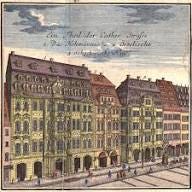
gave him a welcome opportunity to demonstrate his proficiency not only as cantor and director of music but also at the keyboard. Moreover, this collaboration also benefited Bach’s position as cantor of St Thomas’s, for the Collegium Musicum proved to be a useful source of capable temporary musicians for performances requiring a larger ensemble than the choir could muster.
In 1733, Bach submitted the Kyrie and Gloria of his Mass in B minor (BWV 232 I–II) to Frederick August II, the new Elector of Saxony, in Dresden, partly in the hope of being granted the prestigious title of a Saxon Court Composer or Kapellmeister. He also composed his Italian Concerto BWV 971
Italian Concerto BMV 971
In November, after repeated requests, Bach was appointed Composer to the Electoral Saxon and Royal Polish Court, strengthening his hand in the dispute over his powers with the authorities in Leipzig. Around this time, he composed his French Overture, BMV831
French Overture BMV831
The Well-Tempered Clavier, BWV 846–893, a collection of 48 preludes and fugues by Johann Sebastian Bach, was published in two volumes (1722 and 1742). It explores the intricacies of each of the 12 major and 12 minor keys and constitutes the largest-scale and most influential undertaking for solo keyboard of the Baroque era. The compound adjective well-tempered in the title refers to the employment of a tuning system that would work equally well in all keys—a circumstance rare in Bach’s day. An example of such a system, though not the only one available, is that of equal temperament, in which the octave is divided into 12 semitones of exactly equal intervals (compare meantone temperament). Further, by using the word clavier, Bach indicated that is music could be played on any keyboard instrument, including harpsichord, clavichord, and organ. (The piano, newly invented in Italy, was unknown in Bach’s native Germany when the first book was published.) The collection takes advantage of the knowledge that, though keyboard instruments have different mechanisms and produce distinctive sounds, any reasonably competent player can move from one to another without difficulty.
Together, the two volumes of The Well-Tempered Clavier consist of 24 preludes paired with 24 fugues. Bach completed the first book while employed at the royal court in Köthen (Cothen) in the 1720s and the second some two decades later in Leipzig, where he had been appointed director of church music for the city. The pieces were intended as pedagogical exercises to give keyboard players experience in working with the chords, scales, and arpeggios in each key.
The Goldberg Variations BWV 988, is a musical composition for keyboard by Johann Sebastian Bach, consisting of an aria and a set of thirty variations. First published in 1741, it is named after Johann Gottlieb Goldberg, who may also have been the first performer of the work.
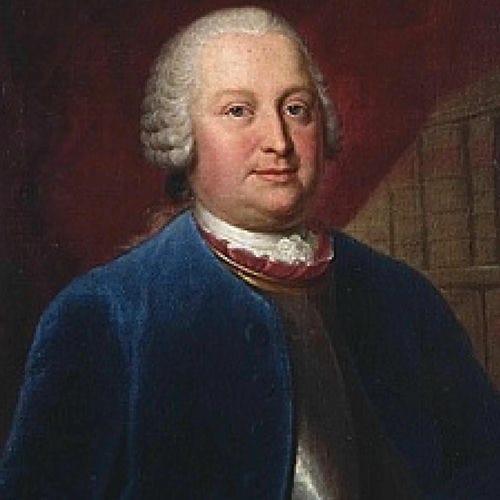
The story of how the variations came to be composed comes from an early biography of Bach by Johann Nikolaus Forkel:[
For this work] we have to thank the instigation of the former Russian ambassador to the electoral court of Saxony, Count Kaiserling, who often stopped in Leipzig and brought there with him the aforementioned Goldberg, to have him given musical instruction by Bach. The Count was often ill and had sleepless nights. At such times, Goldberg, who lived in his house, had to spend the night in an antechamber, so as to play for him during his insomnia. ... Once the Count mentioned in Bach’s presence that he would like to have some clavier pieces for Goldberg, which should be of such a smooth and somewhat lively character that he might be a little cheered up by them in his sleepless nights. Bach thought himself best able to fulfil this wish by means of Variations, the writing of which he had until then considered an ungrateful task on account of the repeatedly similar harmonic foundation. Yet he produced only a single work of this kind. Thereafter, the Count always called them his variations. He never tired of them, and for a long time, sleepless nights meant: “Dear Goldberg, do play me one of my variations.” Bach was perhaps never so rewarded for one of his works as for this. The Count presented him with a golden goblet filled with 100 Louis d’or. Nevertheless, even had the gift been a thousand times larger, their artistic value would not yet have been paid for.
In May 1747, J.S. Bach visited Frederick II in Potsdam and Berlin. It was the only time when Bach was still alive that he was mentioned on the front page of a newspaper when an unknown editor of Berlinische Nachrichten reported on Bach’s evening arrival, the welcome extended by the king, Bach’s performance »on the so-called forte and piano«, and finally the king challenging Bach to improvise a fugue off the cuff on a given theme – a great moment in the history of music which led to Bach’s famous anthology of canons and fugues known as The Musical Offering.
In 1748 Bach completed his Mass in B minor (BWV 232) – a Missa tota (complete mass).
Then in 1749 Bach’s health deteriorated. He suffered from a serious eye condition as well as motor problems in his right arm and his writing hand. He died due to complications following eye surgery in 1750 at the age of 65. Four of his twenty children, Wilhelm Friedemann, Carl Philipp Emanuel, Johann Christoph Friedrich, and Johann Christian, became composers.
There is an excellent interview with Schiff available on YouTube